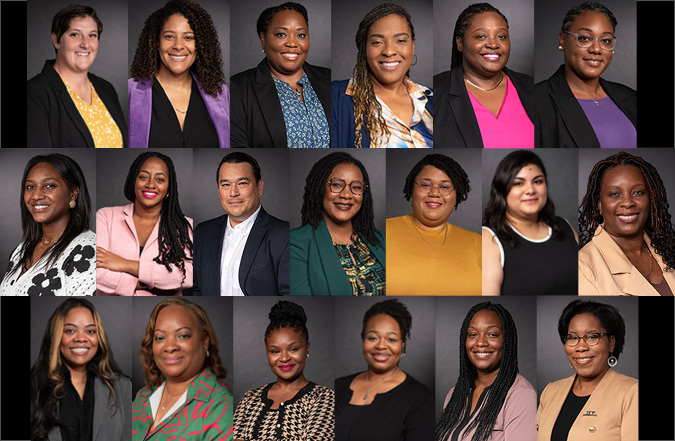
This fall, the AdoptUSKids Professional Leadership Development (APLD) program welcomed its newest alumni as the seventh cohort graduated. The ceremony marked the completion of a yearlong fellowship designed to support professional growth.
Research projects that inspire change
Through action research projects, fellows make meaningful recommendations to address issues in foster care, adoption, guardianship, and kinship.
At the graduation ceremony, fellows share their projects and reflect on how their work can make a positive difference in the field. This year’s graduates focused on topics such as improving permanency outcomes and strengthening father engagement.
The 2025 APLD alumni and their action research project titles
Chelsea Arellano, Fremont Community Department of Human Services, Colorado
“Facilitating Visitation Between Children in DHS Custody and Incarcerated Parents”
Alishia Agee-Cooper, Department of Youth and Families, Washington
“Out of Place: Youth Perspectives on Cultural Mismatch in Care”
Chalilah Ford, Department of Human Services, Division of Family and Children Services, Georgia
“Identifying and Maintaining Birth Family Connections,”
Kesha Harris, Department of Child Services, Indiana
“Elevating Engagement and Empowering Change in Child Welfare,”
Antoinette (Trena) Boswell-Helgerson, Human Services Division, Child Welfare Services, Oklahoma
“Exploring the Impact of a Community-Based Treatment Program on Behavioral Outcomes for Children with Intellectual Disabilities and Heightened Behavioral Challenges Who are in Child Welfare Custody,”
Kimberly Irvin, Department of Child Services, Indiana
“Examining the Impact of Parental Substance Misuse in the Child Welfare System: Challenges, Promising Practices, and Solutions”
La Tika Jeffrey, Department of Social Services, Virginia
“Empowering Youth Transitioning Out of Foster Care: Diamonds and Pearls”
Jamielah Jenkins, Department of Health and Human Services, Children’s Services Administration, Michigan
“Advancing Kinship and Father Engagement and Connection with the Kinship Exception Request Process”
John Lachack, Department of Children and Families, Connecticut
“Planned Transitions Practice Guide”
TaSean Lockett, Department of Social Services, Children’s Division, Missouri
“Older Youth and the Transition: Preparing Older Youth for Adulthood”
Sabrina Plummer, Department of Social Services, South Carolina
“The Missing Voice: Reclaiming Father-Involvement in Child Welfare”
Ashley Garcia Rivera, Center for Adoption Support and Education, District of Columbia
“Cultural Responsiveness in Mental Health Services for Transracial Adoptees and Families”
Shirley St. Hilaire, Department of Human Services, Division of Family and Children Services, Georgia
“The Importance of the Diligent Search”
Yennifer Senices, Department of Children and Families, Massachusetts
“Interagency Community Partnerships”
Pamela Gainer Underwood, Department of Health and Human Services, North Carolina
“Mitigating Negative Impacts and Barriers for Young Adults Transitioning out of Foster Care”
Latesha Wilkerson, Department of Children and Families, Massachusetts
“Youth Permanency Assessment Tool”
Kendra Williams, Department of Child Protective Services, Mississippi
“Evaluating Licensure Policy Impact on Relative Foster Care in Mississippi”
Latarsha Wyatt, Adams County Human Services, Colorado
“High Acuity Designated Placements”
Sharice Zachary, Office of the Parent Defender, North Carolina
“From Separation to Stability: How Interdisciplinary Parent Representation Legal Teams Strengthen Family Outcomes in North Carolina Dependency Court”
APLD application will open in early 2026
Made possible through grant funding from AdoptUSKids, the APLD program launched in 2018 and has since graduated more than one hundred professionals dedicated to advancing child welfare. The structured program combines hands-on experience, mentorship, and engagement with national experts.
Cohort Eight gathered for their program kickoff in October, and applications for Cohort Nine will open in early 2026. Stay tuned for details! Learn more about APLD.